
La Pavoni Lever Espresso Machines: A Traditional Approach To Making Coffee At Home.
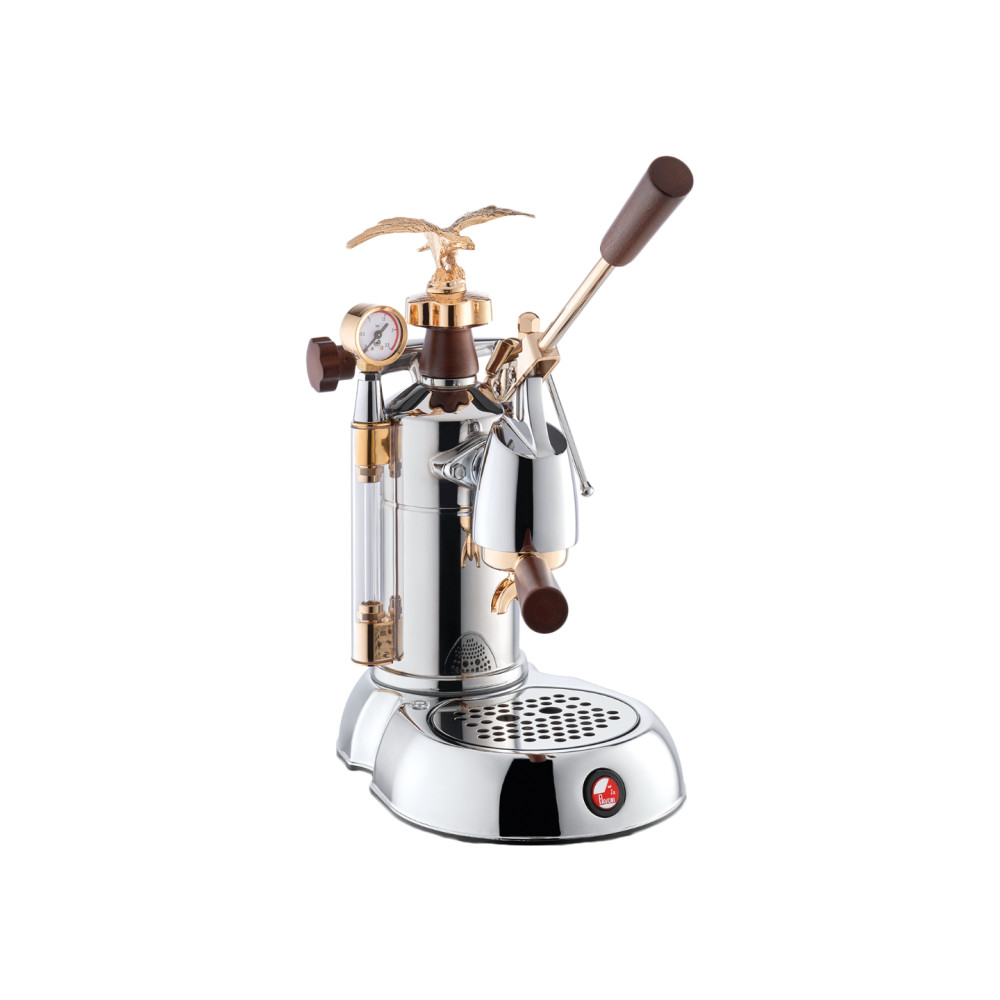
La Pavoni Expo 2015 Edition Lever Espresso Coffee Machine
Unlike most modern machines, which rely on pumps and programmed settings, La Pavoni machines are manually operated. The user controls the extraction directly, using a lever to apply pressure and guide the flow of the shot.
This changes the experience completely. Rather than pressing a button and letting the machine do the work, you become more involved in the process — from controlling the pressure to judging the timing and feel of each shot.
For some, this is exactly the appeal. It turns espresso into something more hands-on and considered, where the process itself becomes part of the enjoyment.
At the same time, it’s not the most straightforward way to make coffee. Lever machines require practice, patience, and a willingness to experiment — and they don’t suit every routine.
In this guide, we’ll look at what makes La Pavoni machines different, how they work, and whether this more traditional approach is something that fits the way you want to make coffee at home.
A brief history of La Pavoni
La Pavoni is one of the oldest espresso machine manufacturers, founded in Milan in 1905. The company played a role in the early development of espresso, but it became especially well known in the 1960s with the introduction of its domestic lever machines, including the Europiccola. Since then, the core design has remained largely unchanged — a reflection of both its simplicity and enduring appeal.
La Pavoni machines have also become something of a cultural icon, occasionally appearing in films as a quiet symbol of Italian style and understated sophistication. La Pavoni espresso machines offer a very different approach to making coffee at home.
While La Pavoni is best known for its lever machines, the company also produces more conventional domestic espresso machines, many of which share a similar design language to other premium Italian brands. These offer a more familiar workflow, but it’s the manual lever machines that continue to define the brand’s identity.
Some links on this page are affiliate links. If you choose to purchase through them, it helps support the site at no additional cost to you.
What La Pavoni machines actually are
La Pavoni machines are known as manual lever espresso machines.
Instead of using an electric pump to push water through the coffee, they rely on pressure created by the user. By lifting and lowering a lever, you control how water moves through the coffee and how the espresso is extracted.
In simple terms, the machine heats the water and prepares the environment for brewing, but the extraction itself is guided by you.
This gives you a more direct connection to the process. The pressure isn’t fixed — it depends on how you use the lever — which means each shot can be adjusted and refined based on feel as well as timing.
Most La Pavoni machines follow a similar design:
A vertical boiler that heats the water
A group head where the coffee is brewed
A manual lever used to control extraction
A compact, upright structure, often with a distinctive, traditional look
This design has remained largely unchanged for decades, which is part of its appeal. It reflects a more traditional way of making espresso — one that prioritises involvement and technique over automation.
How it works in practice
Using a La Pavoni lever machine is a more hands-on process than a typical espresso machine, but the steps themselves are straightforward once you understand the flow.
First, the machine heats the water inside its boiler. Once it’s up to temperature, you prepare your coffee in the portafilter as you normally would — grinding, dosing, distributing, and tamping.
From there, the process changes.
By lifting the lever, you allow hot water to enter the group head and saturate the coffee. This is often referred to as pre-infusion, where the coffee puck is gently prepared for extraction.
Lowering the lever is what creates the pressure. As you press it down, water is forced through the coffee and into your cup. The speed and pressure you apply will influence how the espresso extracts, giving you direct control over the shot.
This means you’re not just starting and stopping the process — you’re actively shaping it.
At first, this can feel unfamiliar. There’s no fixed pressure or automatic timing, and small variations in technique can affect the result. But with a bit of practice, it becomes more intuitive, and many people find this level of control part of the appeal.
What makes La Pavoni appealing
Part of the appeal of a La Pavoni machine is the level of involvement it offers.
Rather than relying on automation, you are directly engaged in the process — controlling pressure, timing, and flow through the movement of the lever. For many people, this makes the experience feel more considered and rewarding, turning espresso into something you actively shape rather than simply produce.
There’s also a strong visual and tactile element. The polished metal construction, exposed components, and upright design give these machines a presence that stands apart from more conventional espresso machines.
Alongside its function, much of the appeal comes from its design. Many La Pavoni machines feature the small eagle perched on top of the boiler — a distinctive detail that has become closely associated with the brand. Combined with their polished metal construction and the fact that they are still assembled with a strong emphasis on traditional craftsmanship, they feel less like appliances and more like enduring pieces of design.
For those who enjoy the process as much as the result, this combination of control, simplicity, and character is what makes La Pavoni machines particularly appealing.
What makes it challenging
That same level of control is also what makes La Pavoni machines more demanding to use.
Without the consistency of a pump-driven system, the pressure applied during extraction depends entirely on the user. This means results can vary more from shot to shot, especially while you’re still learning how the machine responds.
Temperature management can also take some getting used to. With a single boiler system and a more exposed group, the machine can behave differently over time, particularly when making multiple drinks.
There’s also a learning curve. Achieving consistent results requires attention to grind size, dose, and technique, as well as a willingness to experiment and adjust.
For some, this is part of the enjoyment. For others, particularly those looking for speed and convenience, it can feel less practical for everyday use.
For some, this level of involvement is exactly the point. For others, particularly those looking for a more straightforward and consistent workflow, a traditional pump-driven machine may be a better fit.
A few models to consider
La Pavoni’s lever machines have remained relatively consistent over time, with a small number of models that differ mainly in size and capacity rather than overall design.
Europiccola — the most well-known model, compact and well-suited to home use. It typically allows for one or two drinks at a time and is often the starting point for those exploring lever machines
Professional — a larger version with a bigger boiler, making it better suited to preparing multiple drinks in succession while retaining the same manual lever operation
Stradivari — similar in function to the Europiccola but with a more sculpted, ergonomic design, offering a slightly different feel while maintaining the same underlying mechanism.
La Pavoni also produces grinders and accessories, and its machines are available through a number of specialist retailers, including Coffee Friend and Clumsy Goat.
Final thoughts
La Pavoni lever machines represent a very different way of making espresso at home.
They don’t aim to simplify the process or guarantee consistency at the press of a button. Instead, they offer a more involved approach, where technique, timing, and feel all play a part in the final result.
For some, that level of control and interaction is exactly what makes them appealing. For others, it may feel less practical than more modern, automated machines.
There isn’t a right or wrong choice — only what fits the way you want to make coffee.
If you’re drawn to the idea of a more hands-on, traditional approach, a La Pavoni machine can be both challenging and rewarding. And while the learning curve is part of the experience, it’s also what gives each cup a greater sense of involvement and progression.
